

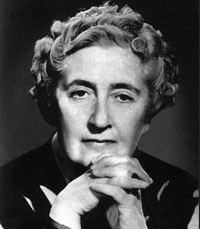
Christie was born in 1890 into a wealthy upper-middle-class family in England, and was largely home-schooled. She was initially an unsuccessful writer with six consecutive rejections, but this changed in 1920 when “The Mysterious Affair at Styles,” featuring detective Hercule Poirot, was published. Her first husband was Archibald Christie; they married in 1914 and had one child before divorcing in 1928. During both World Wars, she served in hospital pharmacies, acquiring a thorough knowledge of the poisons which featured in many of her stories. Following her marriage to archeologist Max Mallowan in 1930, she spent several months each year on digs in the Middle East and used her first-hand knowledge of his profession in her fiction.
According to Index Translationum, she remains the most-translated individual author. “And Then There Were None” is one of the highest-selling books of all time, with approximately 100 million sales. It has also been named the “World’s Favorite Christie” in a vote sponsored by the author's estate. Christie's stage play “The Mousetrap” holds the world record for the longest initial run. It opened at the Ambassadors Theatre in the West End of London on 25 November 1952, and by September 2018 there had been more than 27,500 performances. The play was closed down in March 2020 due to the coronavirus pandemic.
In 1955, Christie was the first recipient of the Mystery Writers of America's Grand Master Award. Later that year, “Witness for the Prosecution” received an Edgar Award for best play. In 2013, she was voted the best crime writer and “The Murder of Roger Ackroyd” the best crime novel ever by the Crime Writers' Association. Most of Christie's books and short stories have been adapted for television, radio, video games, and graphic novels. More than thirty feature films are based on her work.
In 1946, Christie said of herself: "My chief dislikes are crowds, loud noises, gramophones and cinemas. I dislike the taste of alcohol and do not like smoking. I do like sun, sea, flowers, travelling, strange foods, sports, concerts, theatres, pianos, and doing embroidery."
After four years of war-torn London, Christie hoped to return some day to Syria, which she described as a "gentle fertile country and its simple people, who know how to laugh and how to enjoy life; who are idle and gay, and who have dignity and good manners, and to whom death is not terrible."
Christie was a lifelong, "quietly devout" member of the Church of England, attended church regularly, and kept her mother's copy of “The Imitation of Christ” by her bedside. The Agatha Christie Trust For Children was established in 1969, and shortly after Christie's death (in 1976) a charitable memorial fund was set up to help two causes that she favored: young children and old people (like me).
Jerry Lincecum is a retired Austin College professor who now teaches classes for older adults who want to write their life stories. He welcomes your reminiscences on any subject: jlincecum@me.com