Nearly 75 works chart the Spanish painter’s distinguished career in Belle Époque Paris and Gilded Age America in this first-ever retrospective
Dallas, Texas — Following its premiere at Fundación MAPFRE in Madrid, Raimundo de Madrazo will make its U.S. debut at the Meadows Museum, SMU, where it will be on view Feb. 22–June 21, 2026. The exhibition — the first retrospective dedicated to the artist — traces Madrazo’s international career as he became one of the most successful painters of the Belle Époque. Featuring nearly 75 works from major museums as well as private collections, the exhibition follows the artist’s path from his early years in Madrid to the salons of Paris to Gilded Age America. The Meadows Museum is the only venue outside Madrid to present the exhibition.
“The Meadows Museum is honored to present this landmark exhibition of Spain’s most influential academic painter and tastemaker,” said Amanda W. Dotseth, the Linda P. and William A. Custard Director of the Meadows Museum and Centennial Chair in the Meadows School of the Arts, SMU. “Our long-standing partnership with Fundación MAPFRE has made it possible to introduce Texas audiences to the full scope of Madrazo’s career and show an extraordinary gathering of his works, most of which have never been seen outside of Spain.”
Raimundo de Madrazo y Garreta (1841–1920) was a leading genre painter and society portraitist whose refined interiors, luminous palette and technical precision made him a favorite among European and American elites. A central figure in Paris’ cosmopolitan art scene, he built a career that bridged academic tradition and the emerging commercial art market. Although he achieved an uncommon degree of success as a painter, Madrazo’s reputation and legacy receded in the wake of the avant-garde movements that would shape artistic production during the 20th century. This retrospective returns Madrazo to the spotlight, giving long overdue attention to the brilliant career of a talented Spaniard who played a key role in the artistic scene of the 19th century.
Madrazo belonged to one of Spain’s most important artistic dynasties. He was the grandson of José de Madrazo y Agudo and the son of Federico de Madrazo y Kuntz, both accomplished painters and directors of the museum now known as Museo del Prado. His younger brother Ricardo was also a successful artist, and his sister Cecilia, a collector of historical textiles, married the famed painter Mariano Fortuny y Marsal. The tradition continued through Raimundo’s son, the painter Federico de Madrazo y Ochoa (known as Cocó), and his nephew Mariano Fortuny y Madrazo, the celebrated inventor and fashion designer. The family shaped the development and study of Spanish art at a pivotal moment in the country’s history.
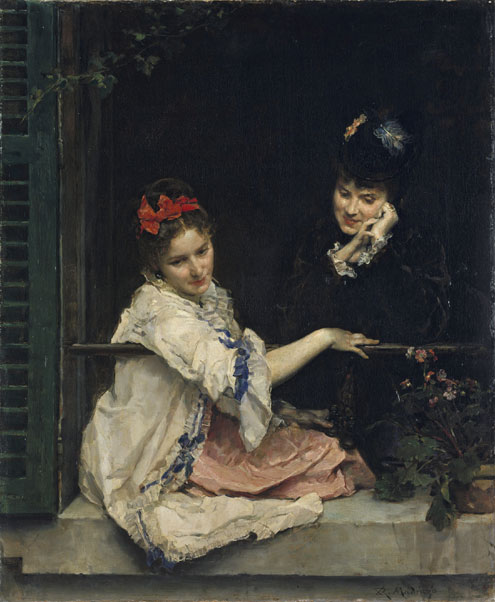
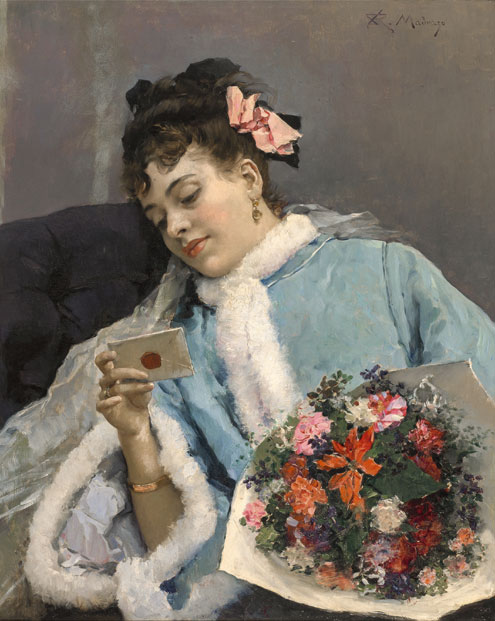
Organized by Fundación MAPFRE and the Meadows Museum, the exhibition follows Madrazo’s shift from grand history painting to intimate genre scenes set in opulent interiors, his collaborations with his brother-in-law Fortuny, and the portraits that established and secured his international legacy. Highlights include Madrazo’s charming, small-scale images of modern life, or tableautins; his beguiling portraits of his favorite model, Aline Masson; and the society portraits he painted in Paris and New York. Together, these works testify to his importance as a key figure at the intersection of academic tradition and the avant-garde.
The Dallas presentation is curated by Meadows Museum Curator Patricia Manzano Rodríguez.
“Visitors will see Madrazo reinvent himself across five decades — from a rebellious prodigy in a family of painters to a global portraitist whose work captured the elegance of the social elite in both Paris and New York,” said Manzano Rodríguez. “The exhibition brings together works never before shown in the United States, allowing audiences to rediscover a painter who was once as famous as John Singer Sargent and Giovanni Boldini.”
The exhibition is organized into seven sections:
- Madrazo’s Family and Artistic Training. Madrazo was born into a multigenerational dynasty of painters and received strict academic training in Madrid, where he excelled in drawing and historical subjects. His early work reflects the disciplined studio practice of his father and grandfather before he departed for Paris to pursue a different artistic path.
- Early Years in Paris. After moving to Paris in 1862, Madrazo briefly studied at the École des Beaux-Arts before rejecting large-scale history painting in favor of genre scenes that appealed to the Paris art market. This shift led to the elegant, intimate interiors that became central to his career.
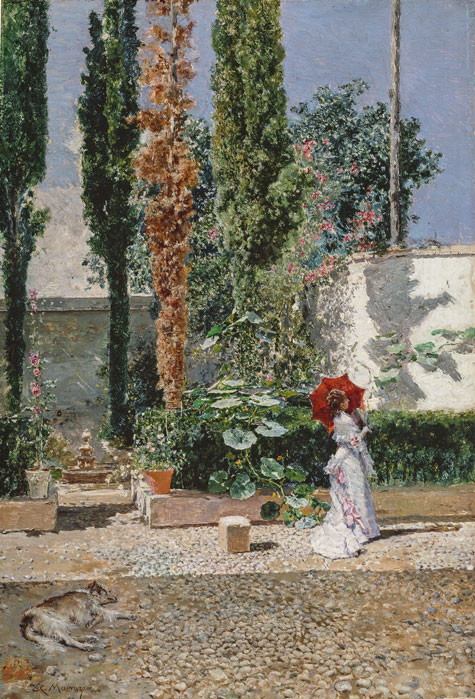
- Fortuny and Madrazo. Madrazo’s close relationship with his brother-in-law Mariano Fortuny led to shared travels, experimentation with vibrant color and detail, and a series of works rooted in Spanish themes. Their collaboration helped position Madrazo as a major figure among Spanish artists in Paris.
- Nonchalance. Responding to bourgeois taste, Madrazo created small interior scenes known as tableautins that featured fashionable women in refined spaces. These works became bestsellers on the Paris art market and helped cement his reputation.
- The Model Aline Masson. Elegant, beautiful, and coquettish, Aline appears in numerous interior scenes engaged in a variety of leisurely activities, or simply lost in thought. For Madrazo she served as an archetype of the elite Parisian woman.
- A Portraitist Par Excellence. In the 1880s Madrazo shifted almost entirely to portraiture, becoming a favored painter among aristocrats, diplomats and leading cultural figures. Through dealers, patrons, and his repeated portrait tours to New York beginning in 1897, he built a strong American clientele that sustained his career even as tastes in France began to change.
- Final Years. As avant-garde art movements gained prominence, Madrazo’s refined style fell from favor, though he continued to receive commissions in Europe and the Americas. He spent his later years in Versailles, painting portraits and nostalgic 18th-century scenes until his death in 1920.
The exhibition will be accompanied by a slate of public programs, including gallery tours and lectures, to be announced in early 2026. A fully illustrated catalogue, produced by Fundación MAPFRE and edited by Amaya Alzaga Ruiz (Assistant Professor in the Department of Art History at the Universidad Nacional de Educación a Distancia, Madrid), will be available in English and Spanish versions in the Meadows Museum Gift Shop.
This exhibition has been organized by the Meadows Museum, SMU, Dallas, and Fundación MAPFRE, Madrid, and is funded by a generous gift from The Meadows Foundation. Promotional support is provided by the Dallas Tourism Public Improvement District.
MEADOWS MUSEUM GENERAL INFORMATION
The Meadows Museum is located on the SMU campus at 5900 Bishop Blvd., Dallas, TX 75205. Hours are 10 a.m.–5 p.m. Tuesday–Saturday, with extended hours until 9 p.m. on Thursday, and 1–5 p.m. Sunday. Parking is free for museum visitors. General admission is $12 adults, $10 seniors 65+, $4 non-SMU students, and free for Meadows Museum members, SMU faculty/staff/students, and youth 18 and under. For more information, go to meadowsmuseumdallas.org.
ABOUT THE MEADOWS MUSEUM
The Meadows Museum is the leading U.S. institution focused on the study and presentation of the art of Spain. In 1962, Dallas businessman and philanthropist Algur H. Meadows donated his private collection of Spanish paintings, as well as funds to start a museum, to Southern Methodist University. The museum opened to the public in 1965, marking the first step in fulfilling Meadows’s vision to create “a small Prado for Texas.” Today, the Meadows is home to one of the largest and most comprehensive collections of Spanish art outside of Spain. The collection spans from the 10th to the 21st centuries and includes medieval objects, Renaissance and Baroque sculptures, and major paintings by Golden Age and modern masters. For more information visit meadowsmuseumdallas.org.