Front Page
-
The indoor market brings together a wide variety of North Texas makers offering original art, handcrafted jewelry, home décor, accessories, specialty foods and gifts you will not find in a typical store. It is an opportunity to shop directly from the people who designed, made and prepared each item—and to find something personal for everyone on your list. November is the perfect time to begin holiday shopping before the season becomes a full-contact sport.
-
The Sam Rayburn VA Medical Center in Bonham, Texas, has a long history of serving veterans dating back to efforts by local community leaders in 1943 to establish a VA facility in the area. Construction began in 1948, and the facility officially opened in November 1951, with U.S. House Speaker Sam Rayburn serving as the keynote speaker. In 1973, the center was renamed the Sam Rayburn Memorial Veterans Center in his honor. VA North Texas Health Care System will commemorate 75 years of serving veterans in Bonham, Texas, at a ceremony beginning at 11:00 a.m. on Friday, November 6, 2026 at the Sam Rayburn Memorial VA Medical Center Auditorium.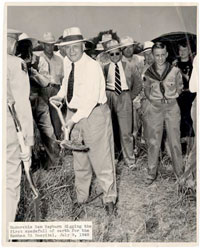
-
Under the direction of Special Events and Theatre Director Abby Morales and Theatre Manager Nichole Belford, The Addison Performing Arts Centre is in the middle of a rebirth. With new seating, updated restrooms, an improved bar experience and other renovations underway, The Addison is also adding different types of programming to its repertoire, while still being home to stunning live theatrical productions. One such newcomer to The Addison is the Addison Full Circle Film Festival, which will take place Nov. 7-8. The Town’s first film fest will show feature-length films at the Main Stage and short films in the Black Box Theatre.
-
Bobbie Phillips began working for the Rayburn family at what is now the Sam Rayburn House State Historic Site. One member of the Rayburn family, Sam Rayburn, eventually served as the Speaker of the U.S. House of Representatives longer than any other person in history. Bobbie worked at the Rayburn house and farm for the rest of her life. She cooked, cleaned, helped tend the garden, and canned as part of her normal duties at the house. She also helped clean the Rayburn ranch cabin in Ivanhoe, TX. Bobbie had a talent for cooking delicious meals without using a recipe, and in a 1961 Life magazine article about Sam Rayburn, D.B. Hardeman wrote that Bobbie “was master of the Rayburn kitchen for 24 years until she died.”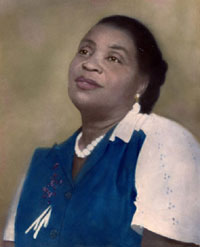
-
The Inflatable Turkey Map is returning to McKinney for 2026, bringing back a beloved seasonal activity that encourages residents and visitors to get creative, explore the community, and have a little fun along the way. After featuring more than 400 inflatable turkeys across McKinney last year, Visit McKinney is inviting the community to make this year's map bigger than ever.
-
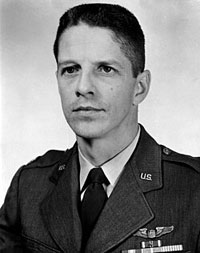
1962 – Major Rudolf Anderson of the United States Air Force becomes the only direct human casualty of the Cuban Missile Crisis when his U-2 reconnaissance airplane is shot down over Cuba by a Soviet-supplied surface-to-air missile. Rudolf Anderson Jr. (September 15, 1927 – October 27, 1962) was an American Air Force major and pilot. He was the first recipient of the Air Force Cross, the U.S. military's and Air Force's second-highest award and decoration for valor. The only U.S. fatality by enemy fire during the Cuban Missile Crisis, Anderson was killed when his U-2 reconnaissance aircraft was shot down over Cuba. He had previously served in Korea during the Korean War. He entered the Air Force in November 1951 during the Korean War. Commissioned as a second lieutenant in 1952, Anderson completed Primary and Advanced pilot training and received his U.S. Air Force aeronautical rating as a pilot; he received his pilot wings in February 1953. He began his operational career flying RF-86 Sabres and earned two Distinguished Flying Crosses for reconnaissance missions after the war ended, when he was assigned to the 15th Tactical Reconnaissance Squadron at Kunsan Air Base in South Korea and flying missions out of Komaki Air Base in Japan. In April 1955, he returned to the United States. After qualifying on the U-2 on September 3, 1957, "he became the 4080th Strategic Reconnaissance Wing's top U-2 pilot with over one thousand hours, making him a vital part of the United States' reconnaissance operation over Cuba in late October of 1962." On Saturday, October 27, Anderson took off on his sixth mission over Cuba in a U-2F Dragon Lady (AF Serial Number 56-6676, former CIA Article 343), from a forward operating location at McCoy Air Force Base in Orlando, Florida. At 10:19 a.m., he was shot down over Banes, Cuba, by one of two Soviet-supplied S-75 Dvina (NATO designation SA-2 Guideline) surface-to-air missiles that were fired at his aircraft by the orders of two Soviet generals, stationed in Havana. The missile exploded near Anderson's plane, spraying it with shrapnel. Some penetrated Anderson's helmet and pressure suit, either killing him instantly or within a few seconds due to depressurization and loss of oxygen.