The seeds, prepared with just the right mixture to help them become vigorous, are firmly tucked into their nourishing soil. As spring quickly gives way to summer, we gardeners jump into action, caring for our gardens throughout spring, summer, and fall.
There are numerous important reasons for harvesting seeds. Biodiversity and cultural heritage empower us to maintain self-reliance and less dependence on commercial seed companies. I have often purchased seeds, looking forward to the beauty that will be coming, only to be disappointed with the actual seeds and their ability to produce as promised. I was eventually able to produce the gardens of my dreams, becoming a seed harvester in the process.
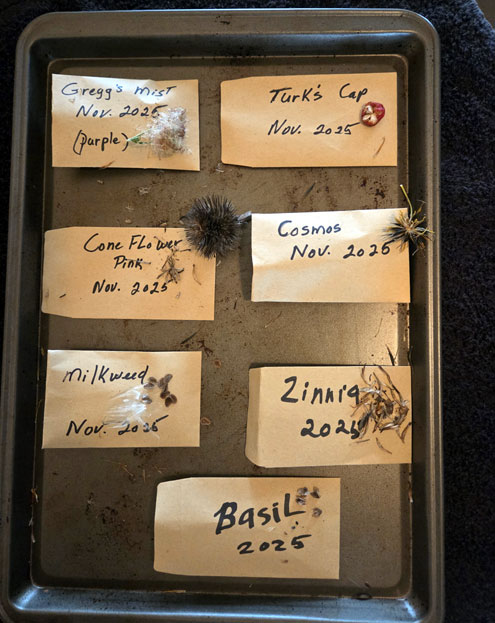
Additionally, by harvesting and saving seeds that thrive in our specific local climate conditions, pest resistance, and diseases, we know our seeds are already adapted to this area. Commercially purchased seeds can also be quite costly. Saving and sharing our seeds also helps build our neighborhood and community. Last spring, I was planting flower seeds in my front garden. My neighbor walked over, and of course, we discussed our gardens. She asked what I was planting from my little brown seed envelope. I explained seed harvesting and sharing. She had never thought about the process, but is now happily harvesting and saving!
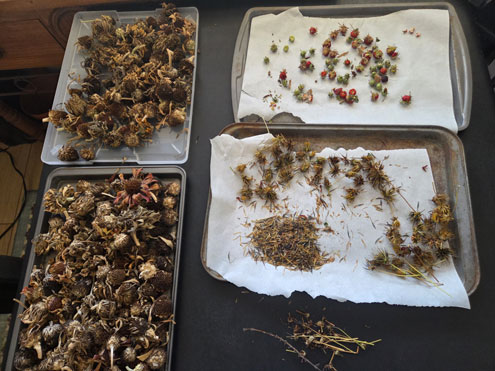
Seeds heads have a beauty of their own. I think my plants leave me a gift for the future when they go to seed! This will be missed entirely if the plants are deadheaded, and subsequent new plants would be lost. Seed saving is practical as well as rewarding in numerous ways. It is enjoyable for me to harvest the fruit of our labors of love, our gardens.
The actions of seed saving had their origins thousands of years ago. The process is relatively simple. There are numerous methods by which seeds can be harvested. Dislodge the seeds from the seed head by either rubbing the head with your hands, creating friction (you may need gloves for some seed heads as they are prickly). You can also thump them gently on a flat surface, allowing seeds to fall off. With my larger sunflower heads, I have also placed the head upside down in hanging mesh bags with good airflow and low humidity. The seeds fall easily into the mesh sack. Do not dry in the direct sun as this can damage seeds. Be sure the seeds are dry before you store them so they do not mildew or grow mold. I spread my harvested seeds on parchment-lined trays to dry, stirring them occasionally to ensure good airflow and remove any chaff or debris.
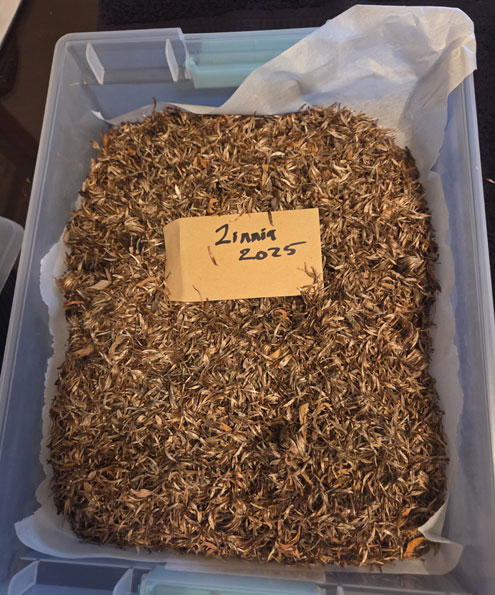
After the seeds are properly dried, which could take a week or two, they should be stored in a cool, but dry, dark place. I have a specific area in a closet where I store the flower seeds. Seeds can also be stored in airtight containers like glass jars or paper envelopes placed in an airtight container. Paper can absorb moisture. I normally only store for one year, then plant or share the remaining seeds. Vegetable seeds can be stored longer. Be sure to label all seeds with the type of seed, date harvested, and any useful notes you may have from the prior year.
I smile when I take out my seeds in the spring, knowing I will be enjoying the beauty of dazzling, bountiful plants!