A wood-burning fireplace or wood stove is a welcome sight in the cold winter months. Now, what do we do with all the ashes? Many gardeners recommend spreading them in the garden beds. However, check out the reasons to do so carefully.
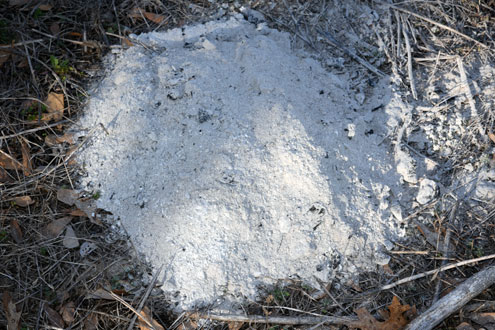
Fireplace ash does provide essential minerals to the soil. Wood ash contains nutrients beneficial for plant growth.
Depending on the type of wood, the ash may contain 5 to 8% potash (potassium), up to 20% calcium, about 1% phosphate (phosphorus), and trace amounts of micronutrients such as iron, manganese, boron, copper, and zinc. Its approximate fertilizer analysis is 0-1-3 (N-P-K), varying with the type of wood. However, a known side effect of adding ashes to your garden is an increase in your soil’s alkalinity or pH value.
According to Texas A&M AgriLife, “a soil pH of from 6.0 to 7.0 is ideal for good plant growth.”
A pH of 7 is neutral. A pH less than 7 is acidic, and a pH greater than 7 is basic or alkaline. If your garden soil’s pH is too high, plants will be less productive and may not survive. A high pH can cause interveinal chlorosis and bleaching, pale mottling, and blotchy or marginal necrosis of new growth. Damage is primarily due to reduced availability of minerals, especially iron, manganese, and zinc, so any of the symptoms of those deficiencies may occur in high-pH soils.
Unfortunately, our native North Central Texas soils, especially those with clay as a major component, usually have a pH above 7. Your city water may also be alkaline. Generalizing from several water quality reports for North
Central Texas, our irrigation water typically has a pH between 7.1 and 8.2.
If you are concerned about the impact on your garden soil’s pH from adding fireplace ashes, consider having a soil test done before adding them and then monitoring the soil pH annually thereafter (Soil Testing Lab resource listed below).
Only use wood ash from burning dry, aged wood from trees such as oak, ash, birch, or pine. Do not use ash that contains cardboard, charcoal, or pressure-treated or stained wood, as they often contain trace elements that are harmful to plants.
Never use wood ash on acid loving plants like blueberries, azaleas or potatoes. In certain cases, it is best to find another way to dispose of your wood ash. Once again, a soil test can be the best friend you have in your garden.
Resources
Soil Testing Lab. https://soiltesting.tamu.edu/
Managing Weeds and Pests in the garden:
https://ucanr.edu/program/uc-master-gardener-program/pest-and-weeds
Plant Diseases: https://ipm.ucanr.edu/PMG/menu.disease.html
https://lancaster.unl.edu/using-wood-ash-garden/
Understanding Soil ph. https://extension.psu.edu/understanding-soil-ph