New resources expand education on potential risks
The Texas A&M AgriLife Extension Service has released two new fact sheets on New World screwworm to help Texans prepare for the threat of the potentially devastating parasite.
These fact sheets are focused on protecting humans and companion animals. They are the latest to be added to an online information hub that includes additional fact sheets, a technical bulletin and related prevention information.
New World screwworm risks for people and pets
New World screwworm poses a significant threat to cattle and wildlife, but dogs and cats are also at risk, and infestations may be fatal if left untreated. Also, while rare, New World screwworm can infest human tissue.
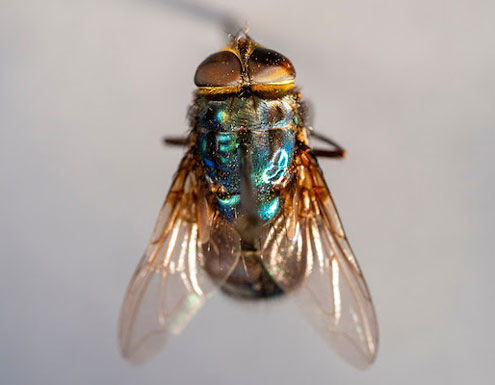
The two new fact sheets – “New World Screwworm Myiasis: Protecting Human Health” and “Companion Animal Care in the Face of the New World Screwworm, NWS, Threat,” – provide research-based information on risk factors, prevention steps and reporting guidance.
The human health fact sheet was authored by Miquela Smith, AgriLife Extension program specialist in health in the Disaster Assessment and Recovery unit, Lubbock, and Mark Faries, Ph.D., AgriLife Extension specialist and professor, Family and Community Health, Texas A&M College of Agriculture and Life Sciences, Bryan-College Station.
The companion animal fact sheet was authored by Guilherme Verocai, DVM, Ph.D., association professor and director, and Rafael Ramos, Ph.D., postdoctoral research associate, both in the Parasitology Diagnostic Laboratory, Department of Veterinary Pathobiology, College of Veterinary Medicine and Biomedical Sciences; and Sonja Swiger, Ph.D., AgriLife Extension entomologist and professor, Stephenville, and Phillip Kaufman, Ph.D., head, Bryan-College Station, both in the Department of Entomology.
Human health risk
The new human health fact sheet highlights the primary risks for people. As of January, the U.S. Department of Health and Human Services has reported a single, travel-related human case in the U.S.
Risk factors identified by the authors for contracting New World screwworm myiasis, which is the infestation of fly larvae or maggots in human and animal tissue, are:
- Traveling to regions and countries where New World screwworm is consistently present, such as South America, Cuba, Haiti and the Dominican Republic, or traveling to areas currently experiencing an outbreak.
- Working closely with livestock and/or wildlife animals in an area with New World screwworm activity.
- Having open sores or wounds that may attract New World screwworm flies — for example, from a scratch, cut, insect bite, surgery or medical conditions such as peripheral vascular disease or diabetes.
Companion animal risk
Pets near southern U.S. borders and those traveling to and/or from Latin America will be at the most risk.
Veterinary advice should be sought to determine if pretreatment for dogs and cats traveling to and from Latin America is warranted. Early detection of New World screwworm myiasis is essential for effective treatment and clinical recovery of pets.
Some protection tips the authors provided are:
- Check pets daily for wounds, including sites of previous tick bites and monitor for foul odors, tissue damage or signs of fly larvae in wounds.
- Assess the pet’s environment for items that may cause injury, such as metal collars or chains, wire fencing and sharp vegetation.
- Observe pets for unusual behavior, such as wound-licking or irritation. Animals may lose interest in food or become aggressive or lethargic due to irritability and associated infestations.
Report suspected cases
There are no confirmed cases of New World screwworm in Texas. However, Texans are encouraged to remain vigilant and report any suspected cases of infestation to one of the following:
- Healthcare providers are asked to report potential human cases to their regional Zoonosis Control office immediately, followed by the CDC at 404-718-4745.
- For livestock and other domestic animals, contact the Texas Animal Health Commission at 800-550-8242.
- For wildlife, contact the local Texas Parks and Wildlife Department biologist or call 512-389-4505.