Federal law prohibits disturbing barn swallows once they nest, so take preventative action now
Spring migration is sweeping across Texas, and barn swallows are already scouting porches, barns, overhangs and eaves for nesting sites. Whether you love watching barn swallows up close or dread the mess they leave behind, a Texas A&M AgriLife Extension Service expert encourages you to take preventative action before the birds begin nesting.
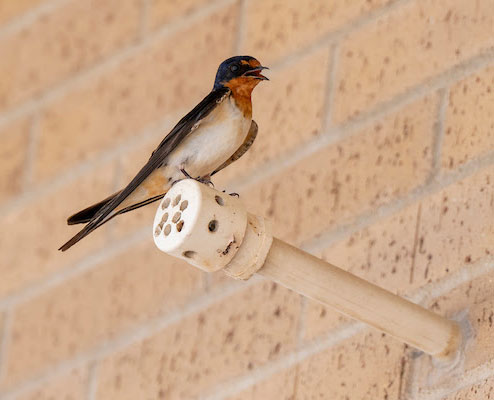
Once they build and lay eggs, homeowners are legally barred from disturbing them, so the window for action is now, said AgriLife Extension’s Liz Tidwell, wildlife program specialist in the Texas A&M College of Agriculture and Life Sciences Department of Rangeland, Wildlife and Fisheries Management, Uvalde.
According to Tidwell, barn swallows will typically enter the southern U.S. until mid-April. Of the eight species of swallows in North America, the two species most likely to nest on houses, barns and other structures are barn and cliff swallows. Barn swallows tend to nest as single pairs, while cliff swallows can nest in colonies of up to several hundred pairs.
These birds prefer nesting on overhangs, covered ledges or other suitable surfaces, using mud to build their nests. If your property meets these conditions, you may find swallows returning every year unless you take preventative action.
Intervene before nests are occupied
“If you don’t want barn swallows on your property, you must immediately take action before any nests are built and occupied,” Tidwell said.
The Migratory Bird Treaty Act of 1918 makes it a federal crime to hunt, kill, capture, sell or otherwise hurt migratory birds, which includes destroying nests in use. In other words, once a bird lays eggs in a nest, it is considered in use, and it is illegal to remove it.
“The main reason people want to remove barn swallow nests is aesthetic,” Tidwell said. “Mud nests on the side of your house or structure, along with the bird droppings underneath, can be unsightly and even pose health concerns due to the droppings.”
Additionally, nests by entryways may also be a nuisance if swallows act territorial and “divebomb” homeowners to protect their nest and young.
“Luckily, swallows are not as aggressive as blue jays or mockingbirds,” she said. “Often, once swallows get used to your presence and know you aren’t going to harm the nest, they will stop swooping down on you.”
How to prevent nest building
Tidwell shared advice for preventing unwanted swallows.
- Cover nesting areas: Use netting or wire mesh to cover areas where swallows could build nests — typically areas like an eave or where a roof and wall meet.
- Hang vinyl strips: Vinyl plastic hung in overlapping vertical strips may be used for places with an open entryway.
- Install bird spikes and barriers: Bird spike sticks and barriers can be purchased and installed to prevent birds from building nests.
- Remove old nests: Knock down old, empty nests. Birds will reuse nests from previous years if available.
- Interrupt construction: When you see signs of new nest construction, knock down the mud daily until the birds give up on their build.
Tidwell said trapping or shooting the birds is illegal, and attempting to scare the birds away is usually ineffective.
How to remove a barn swallow nest
Old, empty nests and the mud placed at the beginning of construction can be removed several ways.
- Use a pressure washer or hose.
- Use a pole or scraper, but use protective gear like gloves and a respirator mask.
- Use caution if handling an empty nest. Parasites and mites can persist in nests as long as three years after a bird leaves.
Reasons to welcome swallows
Before taking preventative measures, Tidwell also encourages you to learn about the benefits of having barn swallows around:
- Pest control: Swallows eat insects many people consider pests — essentially providing a free ecological service.
- Birdwatching opportunity: The proximity of nests to doorways and windows makes for easy bird watching.
- Educational value: Nests allow viewers to experience a bird’s life cycle.
Ultimately, Tidwell said it’s important to remember that these birds are part of the seasonal changes of our dynamic natural world.
“They’re just temporary guests passing through and will leave when the weather cools,” she said.