Texas A&M AgriLife experts share science-based strategies for pasture, herd management
Producers, landowners and agriculture professionals from across East Texas are invited to attend the Beef and Forage Field Day at the Texas A&M AgriLife Research and Extension Center in Overton on April 9.
Hosted by Texas A&M AgriLife Research and the Texas A&M AgriLife Extension Service, the free event will showcase the latest research-driven strategies to improve forage systems, livestock performance and on-farm sustainability.
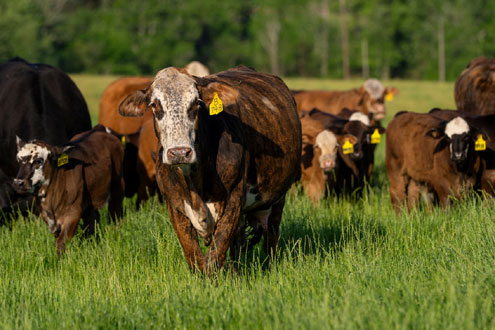
Experts from within the Texas A&M College of Agriculture and Life Sciences will also cover important updates and science-backed recommendations related to two invasive insect pests — New World screwworm and pasture mealybug — that could impact beef cattle operations.
Lunch is provided, and three Texas Department of Agriculture pesticide applicator continuing education units — one general and two integrated pest management — will be available for the morning sessions. Attendees are asked to RSVP at 903-834-6191 by April 3 for an accurate lunch count.
“We’re covering topics that directly relate to herd health and optimizing your operation’s resources in ways that impact your bottom line,” said George Perry, Ph.D., AgriLife Research beef cattle physiologist and professor in the Department of Animal Science, Overton, who helped organize the event. “This is our opportunity to directly engage with area producers, show them what we’ve been working on here at the center in Overton, and help them make informed decisions that improve performance and profitability.”
Morning agenda covers soil health, invasive insects
Registration begins at 8 a.m., followed by a welcome at 8:30 a.m. The morning program features Texas A&M AgriLife experts who will address emerging challenges and management opportunities in forage production and integrated pest management.
- Chemical applications in forage production and how those inputs interact with soil microbial health – Anil Somenahally, Ph.D., AgriLife Research soil microbiologist and associate professor, Department of Soil and Crop Sciences, Overton. His session will explore ways producers can enhance long-term soil function while maintaining forage productivity.
- Pasture mealybug – David Kerns, Ph.D., AgriLife Extension state integrated pest management coordinator and professor, Department of Entomology, Bryan-College Station. He will provide background about the pest and share practical identification tips and management tools for producers.
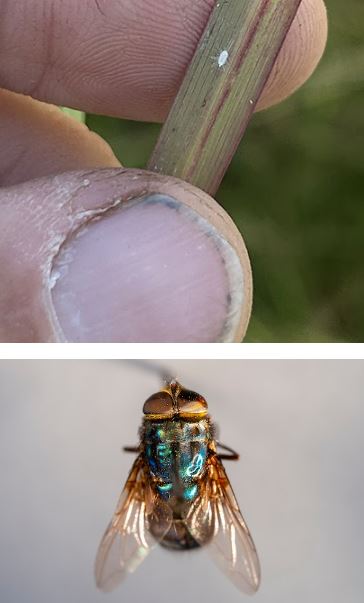
- New World screwworm identification and control methods – Sonja Swiger, Ph.D., AgriLife Extension entomologist and professor, Department of Entomology, Stephenville. The session will focus on early recognition, response protocols and steps producers can take to protect livestock should the invasive pest reappear in the region.
Afternoon beef cattle and forage field sessions at the East Farm
At 1 p.m., attendees will travel to the Texas A&M AgriLife center’s East Farm for concurrent hands-on field sessions related to beef cattle and forage productivity.
For the beef cattle research field session, Perry will highlight new technologies producers can easily integrate into herd management, from data-driven tools to innovations that improve calving efficiency and animal health.
The forage research field session will be led by Somenahally, Monte Rouquette, Ph.D., AgriLife Research forage physiologist, Regents Professor and professor; Gerald Smith, Ph.D., AgriLife Research plant breeder, Regents Fellow and professor; and Vanessa Corriher-Olson, Ph.D., AgriLife Extension forage specialist and professor, all located at Overton and in the Department of Soil and Crop Sciences.
The forage field session will showcase advances in fencing systems, grazing strategies and forage management techniques designed to help producers improve forage quality and pasture utilization.
“Our research is focused on addressing challenges and identifying opportunities for beef cattle and forage producers,” Perry said. “We want producers to capitalize on where the cattle market is and be prepared for the future. We believe having producers tour our facilities and engage in topics and conversations can bring value to them.”