The combination of a late freeze and a lack of chill hours will likely lead to reduced fruit yields across the state, according to a Texas A&M AgriLife Extension Service expert.
Tim Hartmann, Ph.D., AgriLife Extension statewide fruit specialist and assistant professor in the Texas A&M College of Agriculture and Life Sciences Department of Horticultural Sciences, has been connecting with fruit producers and tracking reported chill hours. He emphasized the importance of favorable weather conditions for fruit production.
Temperate fruit crops like peaches, apples, blackberries and blueberries require exposure to cool conditions, causing the plants to go dormant and enabling them to survive the winter weather.
Chill hours issues
Chilling refers to the exposure of plants to this cool weather to overcome dormancy requirements. While there are many models to quantify chilling, the simplest is chill hours, defined as the number of hours in which temperatures remain below 45 degrees during winter.
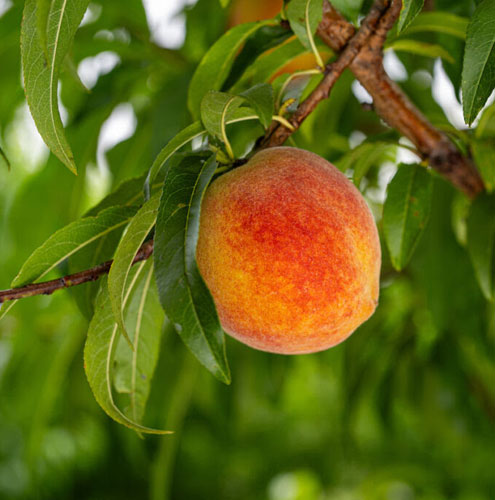
The chill hours required for each fruit and variety vary; peaches in South Texas may require as few as 200 hours, while another peach variety grown along the Red River may need over 1,000 hours for a good fruit set, Hartmann said.
Improper exposure to cooler weather leads to delayed and sporadic bud break, weak vegetative growth, poor fruit set and abnormal fruit development, ultimately resulting in reduced or, in some cases, zero yield.
Hartmann equated the importance of adequate chill hours to waking up after a night of poor rest.
“If you don’t get enough sleep, you’re likely to oversleep and will not function at your highest capacity,” he said. “In the same way, trees that don’t reach the required chill hours will bud late and not be productive.”
Adverse weather reduces output
Across the state, Hartmann said the reported chill hours were well below average. Other adverse weather presented additional challenges for fruit producers.
Other factors like exceptionally warm weather between colder spells, retention of foliage late into the winter, and arid conditions in the fall also likely had a negative impact on fruit crop potential. A late frost that occurred in many regions across the state damaged flowers and young fruit, especially on crops like blueberries and early blooming, low-chill varieties of peaches.
Those issues led Hartmann to expect lower yields for most fruits.
“We will likely see a reduced crop for peaches, blueberries, apples and blackberries,” he said. “Asian persimmons, which require less chilling and tend to bloom later than many other fruit crops, survived the late frost and should have better yields.”
Peaches and apples suffered primarily from a lack of chill hours and frost in March.
Blueberry producers in Southeast Texas saw a hard freeze in late January, but have already begun their harvest and still have a decent crop. However, producers farther north are reporting heavy losses. Some reported 100% crop losses, especially where there was no protection against the frost in March.
Blackberries, a crop that blooms later, did not suffer significant frost damage. However, inadequate chill hours along the Gulf Coast and throughout Central Texas left producers with lighter fruit loads compared to growers in North Texas, reported Jacy Lewis, manager of the AgriLife Extension Viticulture and Fruit Lab in Fredericksburg, and Stephen Janak, AgriLife Extension program specialist, Hallettsville, both in the Department of Horticultural Sciences.
Strategies that support growers
Despite setbacks, Hartmann noted several management strategies producers employed to boost production.
Most fruit producers combat drought with some form of irrigation. Some growers utilize overhead irrigation, which can keep buds and flowers above a given critical temperature through heat generated by the continuous freezing of liquid water to ice, protecting buds from frost damage. Wind machines and other measures can also be employed during frost events associated with calm, clear conditions.
Some peach producers also use a chemical growth regulator to mimic the effect of chill hours.
“Hydrogen cyanamide can have the effect of supplementing some of the chill hours that the buds need to develop fruit and set a good crop,” Hartmann said.
Hartmann, however, said these products are not silver bullets. They can be difficult to obtain and apply during the growing season and are not effective for all crops or even specific varieties. They can also cause trees to bloom early, making them more susceptible to frost injury.
Growers in every region of the state employ different strategies to limit the impacts of adverse weather, but Hartmann said the best way to promote higher yields is to plant fruit varieties best adapted to their location.
“It’s very important to choose varieties that have a chilling requirement as close to what you’d typically expect to receive in your given region,” he said. “Some growers also diversify their varieties based on chill hours in the hopes of avoiding complete losses, but the closer you stay to your average expected chilling accumulation, the better your chances are of making a crop.”
To help growers across the state select the ideal crop and variety, Aggie Horticulture’s Fruit and Nut Fact Sheets provide the required chill hours for crops ranging from peaches to jujubes.