As Memorial Day approaches and grills fire up across Texas, consumers will see a mixed picture at the meat counter. Beef prices remain well above last year’s levels, while pork and chicken continue to offer more affordable options, according to Texas A&M AgriLife Extension Service economists.
Beef remains the most expensive protein heading into grilling season, said David Anderson, Ph.D., AgriLife Extension agricultural economist and professor in the Texas A&M College of Agriculture and Life Sciences Department of Agricultural Economics.
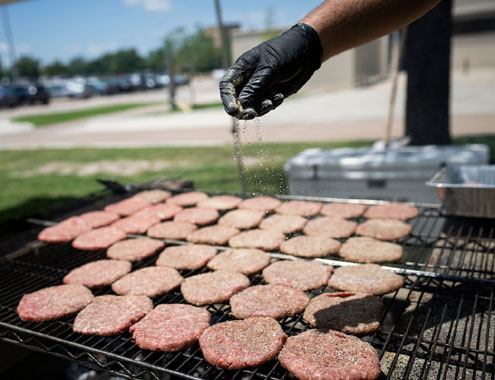
Consumer price index data from March showed choice beef averaging more than $10 per pound across a range of cuts, up from roughly $8.75 a year ago, Anderson said.
He said the higher prices primarily stem from the nation’s cattle herd shrinking to its smallest size since 1961, limiting lean beef supplies.
“Fundamentally, nothing’s changing the fact that beef is going to be expensive and more costly than it was last year,” Anderson added. “Tighter supplies, good demand, that’s driving prices.”
However, some prices at wholesale levels have improved, he said. Rib-eye prices recently averaged about $11.50 per pound, down from about $13 a year ago, while New York strip prices remained steady near $10.45 per pound. Tenderloin prices were slightly higher than last year.
Ground beef also continues to climb. Wholesale prices for 90% lean ground beef reached $4.52 per pound last week, compared to $3.75 a year ago.
Pork and chicken offer relief
Pork prices remain relatively stable, Anderson said. Retail pork averaged $4.87 per pound in March, slightly below the $4.95 recorded a year ago.
Wholesale pork rib prices increased to about $1.90 per pound from $1.55 per pound last year because of tighter supplies. Pork trimmings used in sausage production held steady.
Pork bellies, the source of bacon and a growing favorite among backyard smokers, averaged $1.57 per pound wholesale, down slightly from last year. Anderson said retailers are increasingly stocking whole pork bellies as interest in smoking and diverse cooking styles grows.
Chicken may provide the best value, or at least the lowest price, this grilling season, Anderson said.
Retail chicken prices averaged $2.41 per pound in March, slightly below last year’s prices. Wholesale chicken prices dropped more sharply. Boneless, skinless chicken breasts averaged $1.80 per pound last week, down from about $2.75 a year ago. Chicken wings also declined to roughly 90 cents per pound wholesale – a noticeable drop from $1.99 per pound in early 2025 and their peak at $3.80 per pound in 2022.
“What that might suggest is maybe we’ll see some deals come Memorial Day, some specials on chicken, because grocery stores have been able to price some of that in at a lower cost to themselves,” Anderson said. “That benefits us, the shopper.”
Rising costs still concern ranchers
Higher fuel and fertilizer prices continue to pressure poultry, pork and beef producers and the broader food supply chain. Anderson said fertilizer costs raise feed prices for livestock producers by increasing the cost of corn and soybeans.
Diesel prices also affect transportation costs across the industry, from hauling livestock to delivering meat products to grocery stores.
“I don’t think we’ve seen the full effect of that through our food system yet,” Anderson said. “That’s going to affect everything.”
Despite those challenges, Anderson said consumers may still find opportunities to save this summer, particularly on chicken and some pork products.
“But I would expect some special features around the holidays on a lot of items, including beef,” Anderson said. “Folks are going to notice some relatively less expensive pork and chicken versus the beef side.”