Hunter Williams operates the G Ranch, which rests on the Nolan and Taylor County line in central Texas. Along with his wife, Alexis, and their son, Cole, they are working to improve their property.
With assistance from U.S. Department of Agriculture (USDA) Natural Resources Conservation Service (NRCS) Texas, they have started implementing management practices, working toward a more productive and profitable operation.
The land, purchased by his grandfather in 2000, started as a place to get away.
“I would say it was more of a hobby for him and a place for the family to come out and enjoy just open spaces,” said Williams.
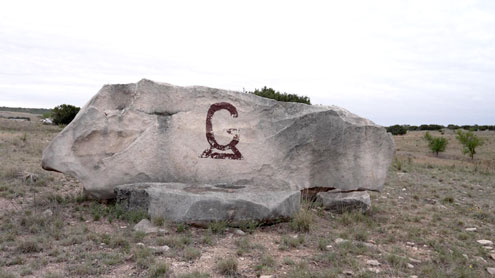
The name of the property, G Ranch, serves as a tribute to his grandparents who started the process.
“The G in the name comes from my grandparents’ last name Gode (pronounced Gûde),” said Williams.
Though they enjoyed the property for recreation, it was Williams who recognized the opportunity to turn it into a business.
Williams and his wife moved to the property in December 2013 with a goal of expanding the cattle operation. In 2015, G Ranch became official.
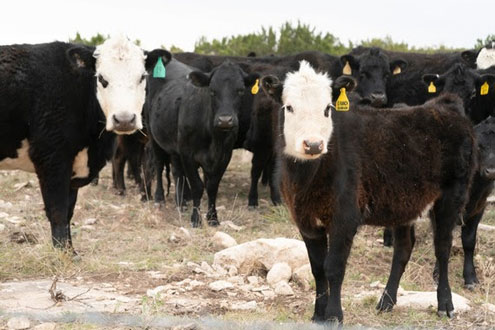
To be able to support his family, Williams recognized his need to own more cattle. With the increase in livestock, he also saw the need for suitable land the livestock could use for grazing. From the start, he needed more of both.
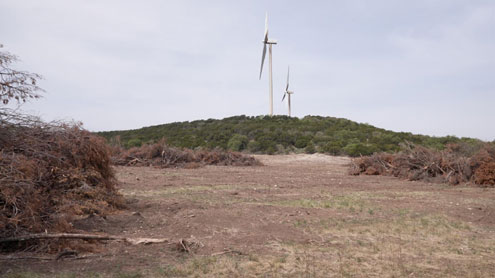
“I didn’t really know what I was getting into,” said Williams. “I knew what I needed to do. I didn’t know how to go about doing it. Our land out here was mostly covered in brush, and brush isn’t a good way to feed the cattle and that led me on a path to grow more grass.”
That’s when he reached out to for assistance from the NRCS, with the goal of conservation improvement.
Recovering the land
The improvements have been slow and steady, requiring patience.
Today their operation consists of cattle and horses, along with native wildlife that call the property home. The ranch is comprised of family-owned land as well as properties that are leased from other landowners in the area.
Though no longer the focus, cropland is still a part of the G Ranch operation.
They maintain a 100-acre cropland field on which Williams utilizes no-till practices and cover crops to disturb the soil as little as possible. This has improved the overall soil health and productivity.
Changing the ecosystem to what it was 100 years ago is not an overnight thing, but it’s the goal.
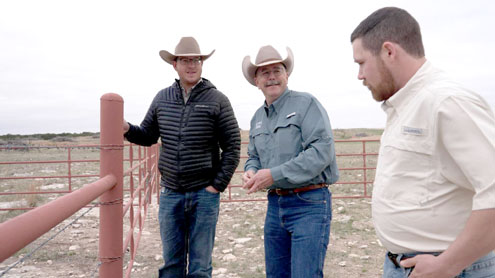
Working together with NRCS, as well as former district conservationist Lee Knox, Williams continues his quest to improve the land.
“Since the beginning, the focus was primarily brush control to increase forage production and biodiversity,” said Knox. “It’s shifted to more of a full ranch management program.”
Williams is now comfortable with the NRCS staff and reaches out for information and assistance. They have formed a partnership through conservation efforts on the G Ranch.
With financial assistance from the Environmental Quality Incentives Program (EQIP), they’ve covered a multitude of needs on the property. The work completed has included brush management (both mechanical and chemical), fencing, native range reseeding, pasture plantings, prescribed grazing, livestock water systems, pest management and prescribed burning.
The improvements and changes in management have been successful. The G Ranch has essentially converted from a shrubland state to a grassland state.
“The number of herbaceous species that are out here is phenomenally large,” said Knox. “We have at least doubled the amount of biomass produced — and that forage not only feeds the livestock, but the wildlife that’s out here.”
Compared to when he began, Williams has improved the carrying capacity of his property by removing the highly dense areas of brush where no grass growth was happening.
“Those are the areas where we’ve been able to establish native plants and really increase forage production,” said Williams.
Spreading conservation knowledge
In addition to improving his own property, Williams is also helping other local ranchers.
“Hunter is the kind of individual every conservationist wants to work with,” said Knox. “He is someone who sees the change and sees the impact, then turns into a true conservationist and starts to tell others about the benefits of it.”
He is spreading the word by providing firsthand knowledge of conservation through his ongoing community outreach and involvement.
“Hunter is dedicated to making his country look better, not only just for himself but also impacting the water for the region.” said Knox. “Hunter has developed into a spokesman even for the district and for the NRCS.”
The future of G Ranch
Williams is positive about the future of G Ranch.
“It’s starting to be talked about,” said Williams. “I think as far as carbon and our water and the future, ranchers are kind of on the front edge of that with how we’re able to take care of our land. We’re using cattle to harvest the sun’s energy that’s growing us grass, but that grass is also able to put so much back into the soil.”
A lot has changed since he started, but according to Williams, there’s still a lot to do.
“Most ranchers are growing the nation’s food supply,” said Williams. “A lot of people look at the cattle industry, and they just see the feed lots. What we’re doing out here on the rangeland, I think it’s going to be seen in the years to come—the work that we’re doing in healing the earth.”
Then and now
The work and cooperation between the Williamses and the NRCS has been extensive.
“It’s been a lot of fun to see the relationship develop over the last eight years,” said Knox. “He trusts us with a lot of his questions about the day-to-day, improvements or ideas he has going on in his head,” said Knox.
“As far as the growth of our operation, NRCS has been a tremendous help,” said Williams. “I know I’ve had a little easier start with the family-owned land and us having some equipment, but NRCS has allowed me to take it to the next level.”
Of particular importance, he cites the knowledge gained from the people that he’s worked with to devise plans. The financial assistance programs have enabled them to put those plans into action as well.
“I don’t think we’ve left a rock unturned out here as far as the opportunity to do work,” said Knox. “Hunter has taken it on himself to take it to the next level.”
“It wouldn’t be profitable trying to do all of this without some kind of assistance like that,” said Williams.
“NRCS has really been a lifeline in helping us.”
Passion-driven pastures:
The journey to effective range management