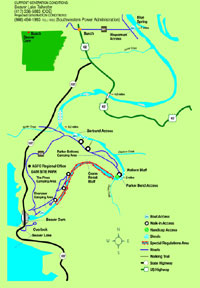
The good news is that the Army Corps of Engineers has once again started releasing colder water through the conduit system while continuing to work alongside AGFC biologists to closely monitor conditions throughout the tailwater. Over the last couple of days, those colder releases have already started bringing river temperature back down into a much healthier range for the fishery.
As the cooler water continues moving through the system, trout activity should continue improving and fish will gradually begin repositioning into more traditional holding areas again. The overall outlook for the tailwater is definitely moving in a positive direction.
Rainbow trout are still being caught consistently using light terminal setups paired with Pautzke Fire Bait, especially during the early morning hours and lower light periods. Clear-water conditions continue rewarding anglers who slow down, use natural drifts and focus on covering water carefully instead of rushing from spot to spot.
Walleye fishing remains steady following the spawn, but fish have become much more pattern-oriented lately. Many are sliding away from the shallow spawning structure and relating more to chunk rock, transition banks, current seams and slightly deeper holding areas during low-flow periods. Slower presentations are continuing to outperform aggressive retrieves right now.
“The biggest factor lately has simply been timing and patience. Feeding windows have been shorter under the low, clear conditions, but anglers staying persistent are still finding quality mixed-bag action with trout, walleye, bass and a few surprise species mixed in throughout the system.
“With colder water now returning to the river and biologists continuing to monitor conditions closely, the Beaver tailwater should continue stabilizing as we move deeper into late spring and toward summer fishing patterns.”
For regular updates during the week, check out Austin’s Facebook page (Busch Mountain Fishing Guide Service).