While the fed cattle futures market reacted and eventually the cash market might react to news of the New World screwworm’s arrival in the United States, nothing has changed with the quality or quantity of the meat supply, said a Texas A&M AgriLife Extension Service economist.
While the New World screwworm can infest any warm-blooded animal, including humans on occasion, the overall message is it does not affect meat.
“This is something to learn about, be aware of, but this isn’t anything to panic about,” said David Anderson, Ph.D., AgriLife Extension agricultural economist and professor in the Texas A&M College of Agriculture and Life Sciences Department of Agricultural Economics. “This isn’t a beef or pork or chicken consumption or meat problem at all. The animals can be treated and survive if it is caught early, and it doesn’t affect the meat whatsoever.”
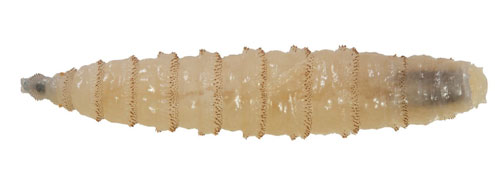
Volatility in the futures market expected
The fed beef cattle futures market reacted immediately, Anderson said, dropping some and then going back up quite a bit, before dropping again.
“I think that’s what a lot of us expected, that once an announcement happened about screwworm being found in the United States, we’d see volatility in the future’s market – that’s just kind of how the futures market works,” he said.
A week after the announcement, futures for fed cattle are down to $229 per hundredweight compared to $250 per hundredweight in the futures market prior to the screwworm finding, Anderson said.
It is too early to tell the effect on the cash market, whether that is feedlot cattle headed to a packer or calves marketed at sale barns across the state, he said.
Beef herd still small, prices still high
Fundamentally, though, Anderson said, nothing has really changed.
“We still have the smallest cow herd since 1961, we’re producing less beef than we did last year, and we continue to have very good consumer demand for beef,” he said. “We still have tighter supplies of beef, but we have more cattle on feed than we did a year ago.”
In the normal beef market, Anderson said, this time of year – “grilling season” – tends to see some increasing beef production relative to April and May or the springtime, but there’s still less than a year ago.
The retail beef market has already seen record prices, and this recent announcement shouldn’t affect near-term supplies of beef, Anderson said.
“Prices are going to stay high,” he said. “But typically, retail prices for beef tend to level off and decline after the middle of the year after we get past the grilling season rush. I don’t think this should have any effect on retail prices.”
What’s a producer to do?
Producers should focus management practices on herd protection — treat wounds as a preventative measure, monitor for signs of larvae, work with local veterinarians to address any New World screwworm infestations and report the case so that the U.S. Department of Agriculture can drop sterile flies in the area to mitigate the potential for additional cases.
“Practice good animal husbandry and lean on your local vet if you need to treat an infestation,” Anderson said. “These are going to be difficult times for our livestock and wildlife producers — it is an important pest from the past – but we’ve dealt with it before and we know how treat it and how to eradicate it.”
He reiterated producers should not just look at their cattle, but all animals, including horses and pets, as all warm-blooded mammals are susceptible.
“Pay a little closer attention to them all,” he said.
Stay up to date on the latest expertise offered by Texas A&M AgriLife at tx.ag/screwworm.