Greenville, Texas -- For a month from June 6 to July 4, 1944 Allied soldiers came ashore at Normandy, many never walking past the first few yards before being killed by awaiting Germans or stepping upon one of the remaining mines. Unit reports give a description through many eyes. “We were headed straight for the enemy now,” noted one. “Quite privately we sensed the void in the pit of our stomachs. Many of us would be losing our lives.” Some landed first, some in at least six following waves of troops.
John Milton Good was born in Cooper, but grew up in Paris. It was quiet when his 83rd Infantry Division landed near Carentan, but still dangerous. Many jumping into the water were also sick from the rolling decks of the craft they rode in on. Good saw to his left at Omaha Beach the result of the initial assault by the First Infantry Division, or what became known as the Big Red One. But, by then so little action was around Good that he even grabbed a long stick, reached around a concrete wall, flipped open a satchel, and out rolled a pristine German flag. He kept it as a souvenir the rest of his life.
On July 23 at 7 p.m. in the Audie Murphy Museum, Greenville, Texas, Dr. John C. McManus, professor of history at the Missouri University of Science and Technology in Rolla, will lecture on the invasion as seen from the eyes of the 1st Infantry. They helped clear the path for the thousands of soldiers riding the waves out in the Channel awaiting their turn to land. A storm delayed the debarkation, but when quiet the men could hear the action ashore.
One report read, “There they were…the sheer, forbidding cliffs of France, smack in front of us. Not two miles away. We wondered how the hell the D-Day boys had managed them.” Dr. McManus will explain.
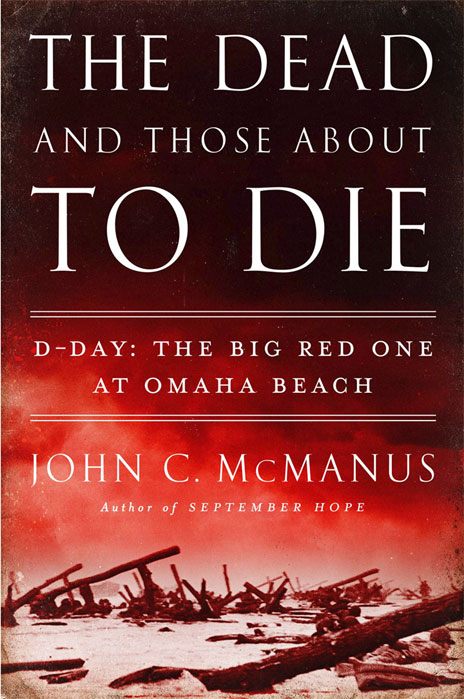
Admission is free and the public is invited to relive this action-packed story of how one division broke through the enemy lines and began the march to end the terrible war.