A determined immigrant with a talent for numbers and finance would transform the new United States in ways no one predicted in the years after the American Revolution. As important as the warfare was to winning independence, the political and economic revolution afterward would propel the nation forward.
Alexander Hamilton, whose influences include savings bonds, newspapers, and even the U. S. Constitution, pushed through new and controversial ideas to a skeptical nation that still impacts America more than two centuries later.
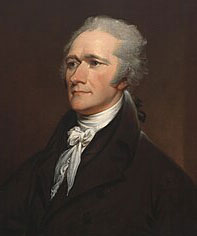
He arrived in New York in 1772 and soon became involved with the growing revolutionary cause. He wrote several pamphlets condemning British actions against the colonies in 1773 and 1774. In 1775, he joined a local artillery unit. By 1776, he was appointed the rank of captain and was ordered to enlist men and support.
The British invaded Long Island in the summer of 1776, and Hamilton fought in several of the battles in and around New York City. The campaign was a disaster for the colonists. Impressed with his daring and resourcefulness, Gen. George Washington appointed Hamilton as his personal aide with the rank of lieutenant colonel, beginning a lifelong friendship between the two. At the Battle of Yorktown in 1781, Hamilton would command three battalions as America swept to victory over Britain.
In 1780, Hamilton met and quickly married Elizabeth Schuyler, the daughter of Gen. Philip Schuyler. The couple would have eight children together. After the American Revolution ended in 1781, Hamilton poured into studying a friend’s law library and within six months had become a lawyer by 1782. Within a few months, he was appointed to the Confederation Congress and served for a year.
He was elected to the state legislature, and in 1784 at age 31, founded the Bank of New York, elements of which still exist. His bank was also the first company to be traded on the New York Stock Exchange when it opened in 1792. He also began to serve on the board of trustees of his old college, now renamed Columbia College.
In 1785, Hamilton joined lawyer, diplomat, and fellow New Yorker John Jay and a number of other prominent New Yorkers to found the New York Manumission Society. After some time, they successfully petitioned the New York legislature to ban slavery, in a process starting with the children of slaves born on or after July 4, 1799.
Frustrated with the loose system of government under the Articles of Confederation, he worked with James Madison to call for a new constitutional convention in 1787. Though Madison would lead most of the debates on the new Constitution, Hamilton was a strong voice in the process, calling for a more centralized government with strong checks and balances. Most of the New York delegation, however, objected to the initial lack of a bill of rights, leaving Hamilton the sole signatory for New York.
In 1787 and 1788, Hamilton worked with Madison and Jay to write a series of essays to convince New York to ratify the new Constitution. Hamilton would end up writing most of these 85 essays, later called The Federalist Papers. They have since become classic works on the nature of the federal government and answering most of the criticisms of the new frame of government. New York would ratify as a result. His essays are still widely studied in American colleges and high schools today. At 33, he was only getting started.