I guess most of us outdoor types have equipment that we’ve become fond of over the years. For some, it might be an old outboard motor that was acquired years ago that just refuses to wear out. Others might still be shooting and hunting with the same old 30-30 that has served them well through a lifetime in the deer woods.
I have several such items that worked decades ago and continue to perform like new. One is a little hog trap made of stock aluminum. I have trapped a lot of wild pork with this little trap through the years and recently brought it out of semi-retirement -- it’s time to put some prime pork in the freezer for an upcoming members dinner at office of the Dallas Safari Club (DSC) next month.
My good friend Larry Weishuhn has for many years been an ambassador for this awesome organization. When Larry invited me to help him host the dinner I was all in. The plan is for Larry to prepare a whole bunch of buffalo (bison) burgers from the meat of a buffalo that Mr. Steve Hornady took while hunting earlier this year in southeast Oklahoma at the Choctaw Hunting Lodge.
My assignment is pulled pork and my goal is a couple of young fat ‘eater’ hogs for the smoker. I will mix the wild pork with a few domestic pork shoulders. Wild pork is usually very lean and the fat from the domestic pork will help baste the lean meat during the long smoking process.
I love planning for events like this; the assignment will allow me to get out in the woods and put my old trap to use and later spend some pleasant time around the smoker transforming the meat into tasty barbeque.
I was given this trap about 25 years ago by a company that sold sturdy aluminum traps. These units were designed for folks like me that wants to catch one or two small hogs. My trap weighs 54 pounds and I’ve used it to catch hogs weighing up to 140 pounds although most mature hogs are hesitant to go into such a small enclosure, the trap is about 6 feet long and 3 feet wide, it’s easy to transport and ideal for catching smaller eater hogs that I usually target.
There is no bottom in the trap; it’s necessary to stake it down. I once caught a big boar in the trap (I had a trail camera set nearby and watched him walk in). Once the door slammed shut, the big boar started jumping up and hitting the top of the trap with his head and back. His back was only six inches or so from the top of the trap. I found the trap about 20 feet from where it was set. The big hog had pulled two T posts out of the ground and snapped a sapling I had wired over the top of the trap. But the trap works just fine for the size hogs I target.
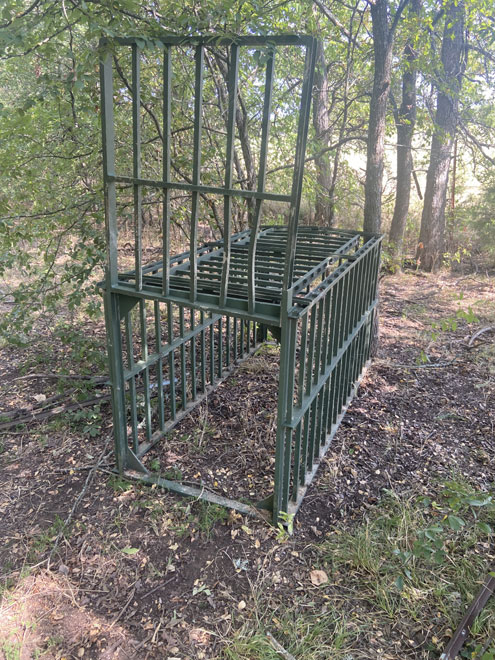
The last time I used it was about 4 years ago on my friend Jeff Rice’s ranch. Jeff, Larry Weishuhn and I set it in hopes of catching a pig for the smoker. The next morning when we checked the trap there were FOUR twenty-pound pigs in the trap and each one of them had its head wedged between the vertical aluminum bars. In the melee we managed to get all the pigs unstuck and they hit the woods running at top speed. By the time we got them unstuck, we had lost all interest in smoked pork!
My trapping system usually produces pork in a couple days. I will set the trap adjacent a trail that hog use on a nightly basis as they travel from their bedding area in the woods to food and water. I will not set the trap the first night but bait the trail and inside the trap with corn, a trail camera will be set to monitor the hogs. If all goes according to plan the porkers should find the corn the first night and probably go inside the trap and clean up the bait.
Once I know hogs are coming to the trap, I will set the trip wire that releases the door late one afternoon and run it at first light the next morning. The trap will be set in the shade, but, in the heat of summer, it’s a good idea to check for hogs at first light each morning. It’s much easier and more comfortable to deal with processing the meat during the coolest part of the day.
My goal is to catch a couple of smaller hogs, process and freeze the meat until I decide to fire up my smoker and transform it into pulled pork. Mixed with the domestic pork shoulders, the barbeque should be tasty. I usually cook the shoulders and hams whole and inject them with butter, garlic, salt and pepper. I also poke holes in the meat and load it up with slivers of jalapeno pepper which winds up chopped along with the meat in the pulled pork.
The key to tasty pulled pork in long slow cooking with moisture. When cooking straight wild pork, I usually add beef broth and barbeque sauce to insure it doesn’t dry out. I’ll smoke the meat in a big aluminum pan for four or five hours uncovered and then wrap it with aluminum foil and allow it to cook overnight with my Smokin Tex electric smoker set at 200 degrees. The meat is always fall off the bone tender.
Rather than simply pulling the cuts of meat apart and shredding it, which is common to pulled pork, I use a cleaver and chop it across the grain into smaller pieces. This makes preparing sandwiches much easier and avoids the often-stringy pulled pork. I guess I should call mine ‘chopped pork’.
I love a good challenge, especially if the end result is enough tasty meat from the wild to feed a large group of like-minded outdoor folks!
Check out Luke’s weekly podcast “Catfish Radio with Luke Clayton and Friends” just about everywhere podcasts are found. Email Luke through his website www.catfishradio.org