
A Joint Project of the Sam Rayburn House Historic Site and the Fannin County Historical Commission
Celebrating America 250 with Spotlights of Fannin County Citizens Who Participated In or Witnessed Historical Events
Fannin County, Texas -- Harry Peyton Steger was born in Tennessee in 1882. His parents were Thomas and Alice Steger. The family came to Bonham 1889 when Harry was 7 years old. His father, a lawyer, was said to be a great lover of books and one of the best read men in the county.
Harry graduated from Bonham High School and then attended the University of Texas in 1897 at the age of fifteen years, where he majored in literature and classical languages, was editor of the Cactus yearbook, and graduated Phi Beta Kappa.
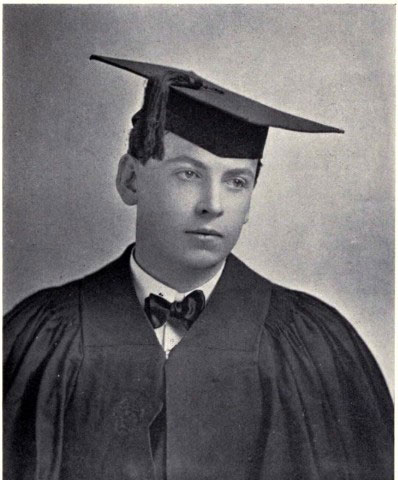
He taught Greek and Latin at Mineola and Bonham and studied Sanskrit at Johns Hopkins University before winning a Rhodes Scholarship in 1905, the second Rhodes Scholar from Texas.
As a Rhodes Scholar, he attended Oxford University beginning in 1905. He was president of the largest debating club, the Arnold Literary Society. Articles about his time in London were published in English, German and American magazines, including articles on the London slums. Because he wanted to know more about a tramp’s way of life, he became a tramp, walking 250 miles from Queensboro to London, dependent on backdoor handouts for food and sleeping in parks or under hay lofts or in rural barns. He wrote a series of articles on this experience for magazines.
After returning to New York City from London, he became connected with the publisher Doubleday, Page & Company. He became the literary editor of O. Henry (Sidney Porter) and was the administrator of O’Henry’s estate when the short story writer died, editing the last volume of O. Henry stories.
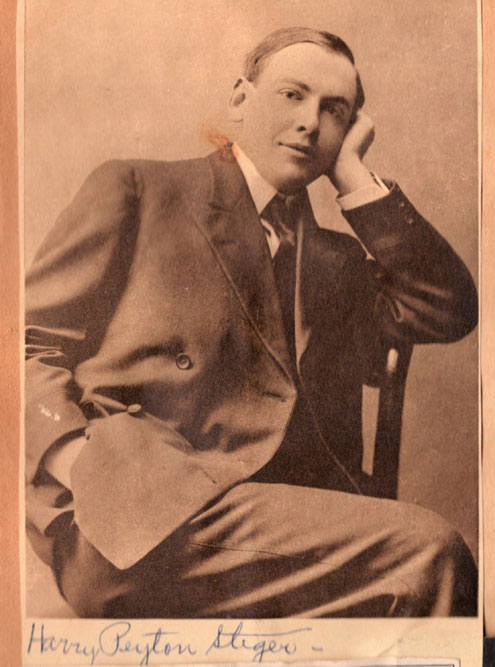
Peyton Steger, as he was known at that time, died suddenly at the age of 30 on January 5, 1913 in New York City of “acute kidney disease.” He is buried in Willow Wild Cemetery.
The UT yearbook, the Cactus, wrote in its 1913 edition: “He was the most distinguished graduate that the College of Arts has produced. He was an able scholar and a brilliant man of affairs, but to those of us who knew and loved him he will always remain a charming, impulsive, delightfully human boy.”
Walter H. Page of Doubleday wrote: “I have known no other man who in the same length of time made so many intimate acquaintances in the writing world and who gave his friends so rich a return of helpful companionship . . . I could not undertake to tell you how seriously he is missed . . . by the literary world and by us.”